

Our Students’ FireCoord Project Has Been Awarded TÜBİTAK 2209-A Support...
Tarih: Date -
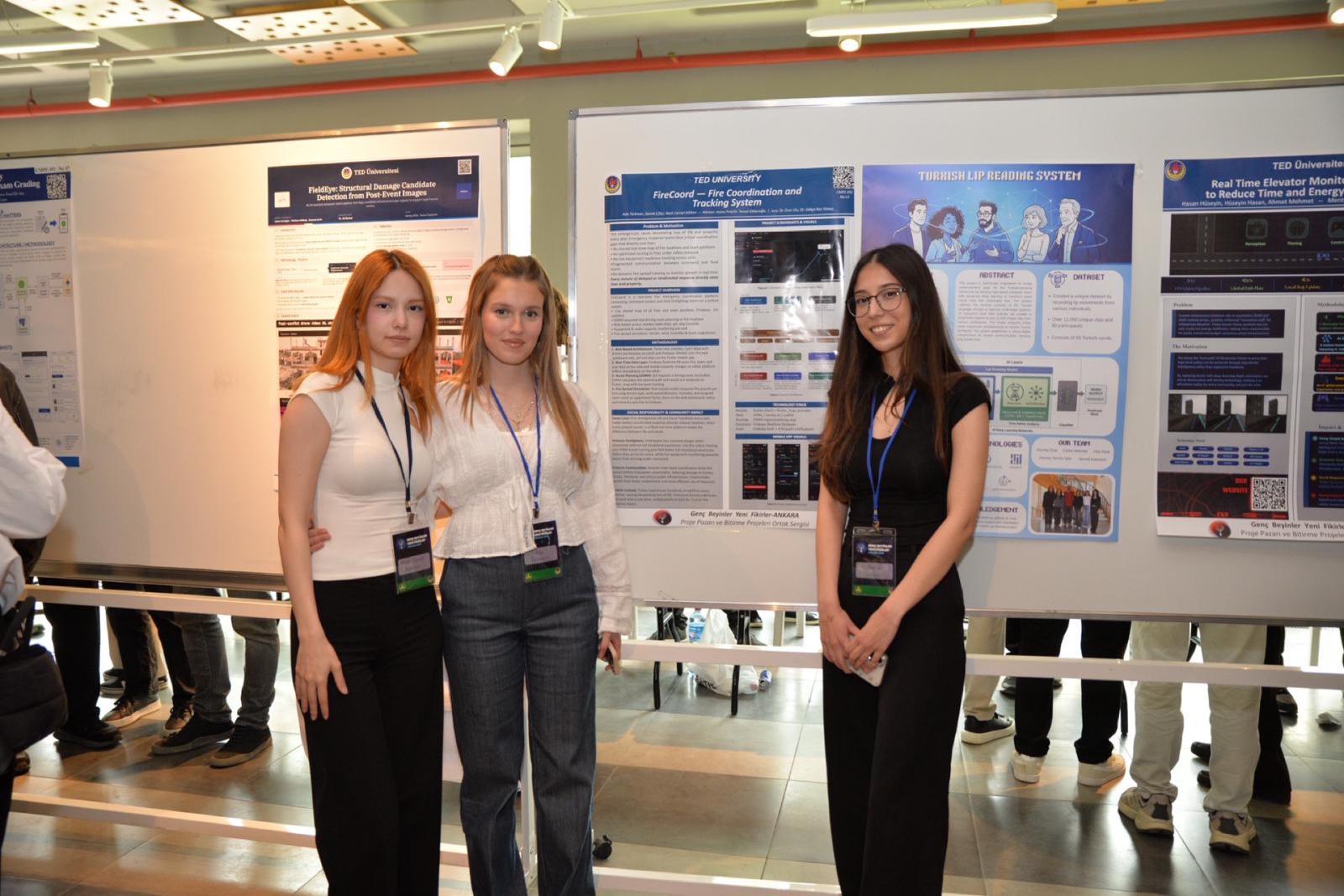
Our students Damla Çiftçi, Nazlı Cansel Atlıhan, and Ada Türkmen developed an innovative project for forest fire response operations under the supervision of Prof. Dr. Tansel DÖKEROĞLU. The FireCoord project, developed by our students, has been awarded support within the scope of the TÜBİTAK 2209-A University Students Research Projects Support Program.
FireCoord is a real-time fire coordination and tracking system designed to strengthen coordination among teams in forest fire response operations, enable more efficient use of resources, and improve the safety of intervention processes. Consisting of a web-based command center panel and a mobile application developed for field teams and fire department chiefs, FireCoord enables real-time monitoring of fire incidents, team locations, equipment status, and operational updates. The system was developed using the Agile software development methodology; the mobile application was built with Flutter, while the web panel was developed using modern web technologies. All components were synchronized through Firebase Realtime Database, enabling real-time data sharing between web and mobile platforms. Through FireCoord, field teams can transmit their live GPS locations, fire reports, and status updates to the command center, while fire department chiefs can update the availability status of critical resources such as vehicles, equipment, and water capacity. The command center can monitor active fires, team locations, and resource status on a live map, allowing for more effective operation management and resource planning. Within the scope of the project, OSRM-based route optimization has also been integrated to provide fire crews with the safest and shortest driving route to the incident location. In addition, the system supports decision-making processes through a fire spread simulation that takes into account factors such as terrain structure, wind speed and direction, humidity rate, and response activities. As part of the ongoing development process of FireCoord, it is planned to integrate artificial intelligence-supported computer vision modules into the system. Through these modules, images received from field teams will be analyzed to verify whether there is a fire, estimate smoke density, predict the size of the fire, and determine its possible direction of spread. By bringing together real-time communication, live tracking, route optimization, resource management, fire spread simulation, and AI-supported analysis, FireCoord aims to reduce response times, strengthen coordination among teams, optimize resource utilization, and contribute to the safety of both fire crews and the public.
We congratulate our students Damla Çiftçi, Nazlı Cansel Atlıhan, and Ada Türkmen, as well as Prof. Dr. Tansel DÖKEROĞLU, who supervised the project, on this successful work and wish them continued success.